Sydney and I set out to create a delicate balance: an immersive theater piece that welcomes audience members in as collective participants–not witnesses–while still guiding them through a clear and compelling narrative. Oh, and with no live actors!
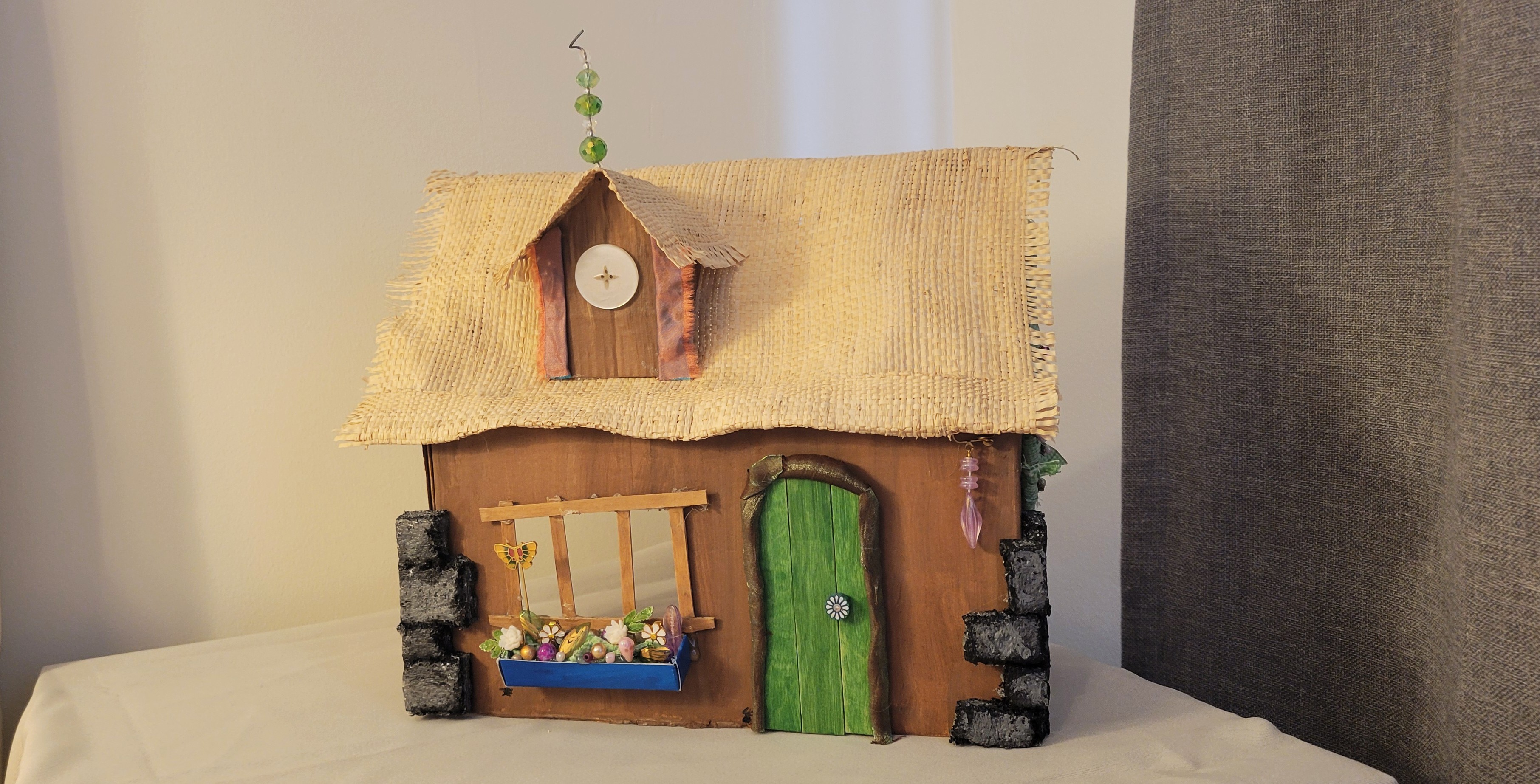 The titular cottage
Generous Instruction
The structure of the piece drew both on classic five-act story structure and video game sequencing: each major narrative beat was a level, an escape room-style puzzle based on the reconstruction of different sections of the story world that participants worked together to solve. Developing narrative mechanics that were generous to the participants simultaneously meant giving them genuine freedom to interact and providing them with enough support to feel confident forging ahead. Through playtesting, we discovered that strategic redundancy was key– coupling open sections of gameplay with multiple methods of guidance (participants would receive a physical map, and the lighting would shift to highlight their new path, and sound cues indicated travel) was quite effective in maintaining the immersion and momentum.
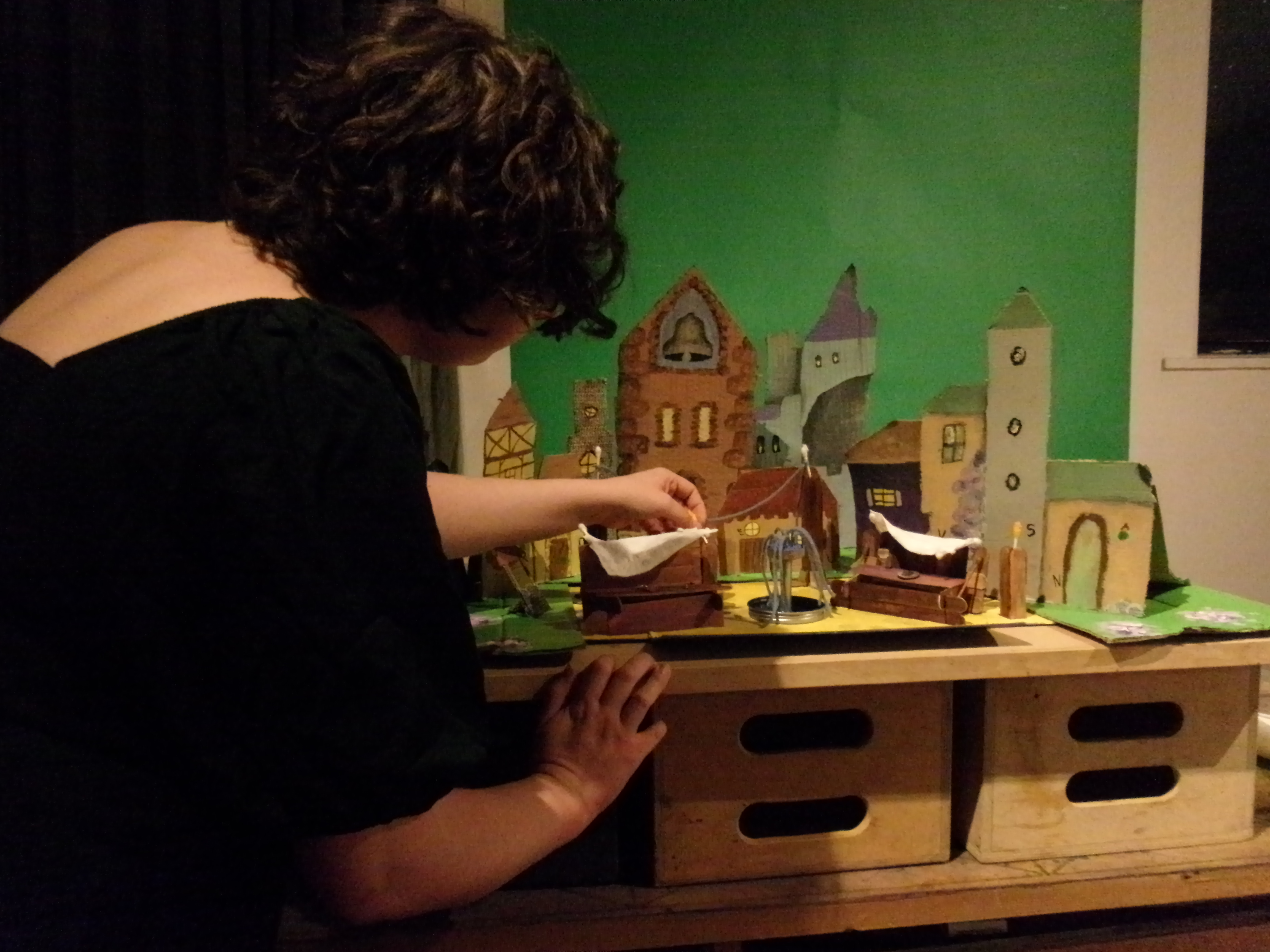 Level 2: The Village of Phemera
Skip the Cutscene
Playtesting also taught us a crucial lesson about narrative information. Completing a level initially triggered a sound cue of character speech, but if you’ve ever wished you could skip a cutscene in a video game, you know: it is an uncomfortable feeling to be relegated to a listener when you just had the power of interactivity. We took out all audio spoken by characters, except in the tutorial–before the participants are hands-on–and a moment further in the show where the sudden halt of momentum was very intentional. Instead, direct narrative information was given through diary entries that audience members read aloud to each other. This put the focus back on their collective participation in the piece and gave us more opportunities to build the story progression into the environment itself.
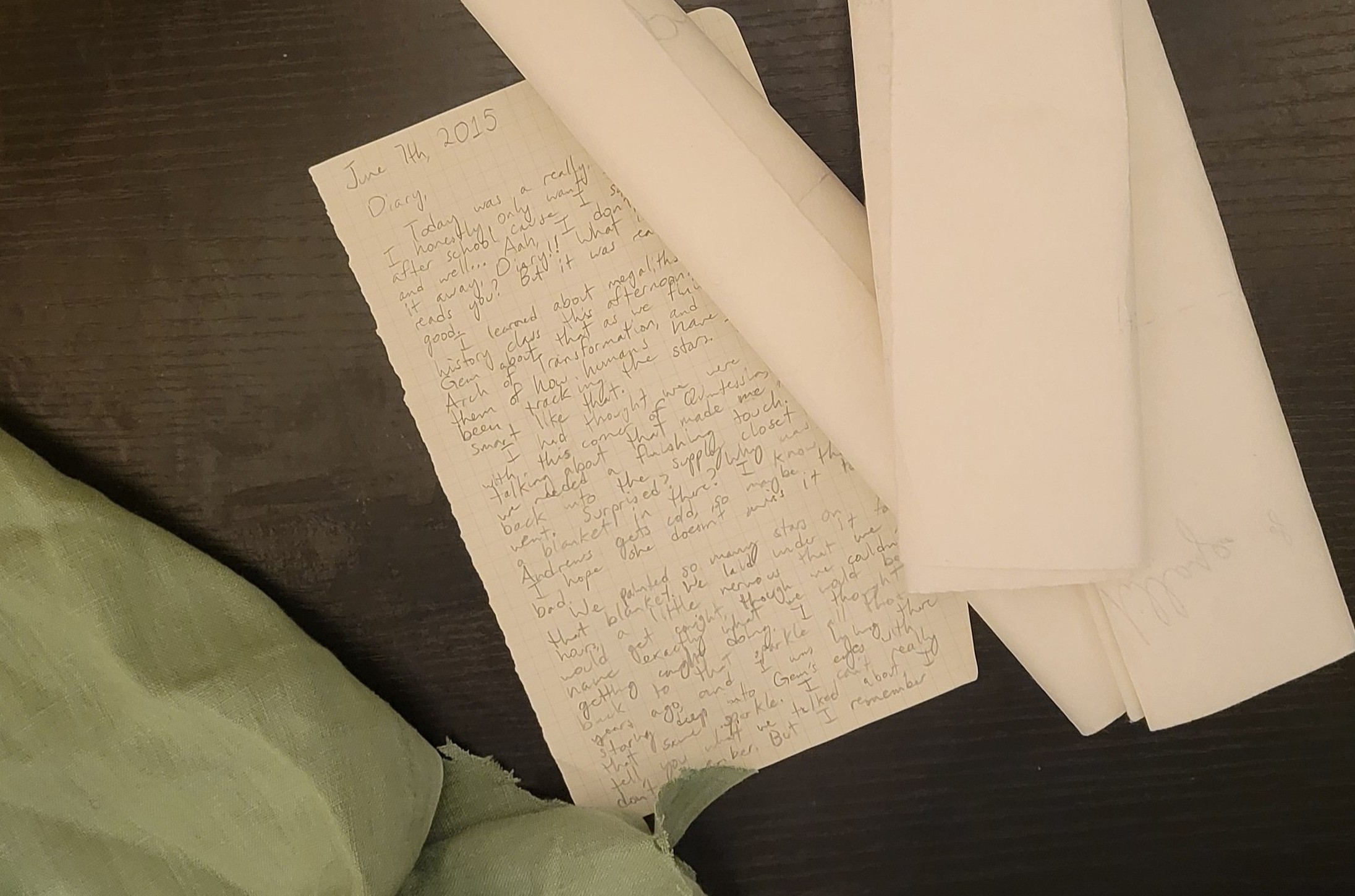 Diary entry for Level 3
Living Room
But how do you deliver a physical artifact in response to audience action in a space you aren’t in? With architecture you can’t change, a limited budget, and whatever materials you have on hand? We leaned into the whimsy and fantastical nature of the piece and became part of its technical systems. Instead of playing a sound cue, Sydney and I slipped diary entries under doors, released them with magnets, tucked them in drawers; along with constantly swapping set decorations when we were out of sight, this helped the space come alive and deepen the fantasy in real time.
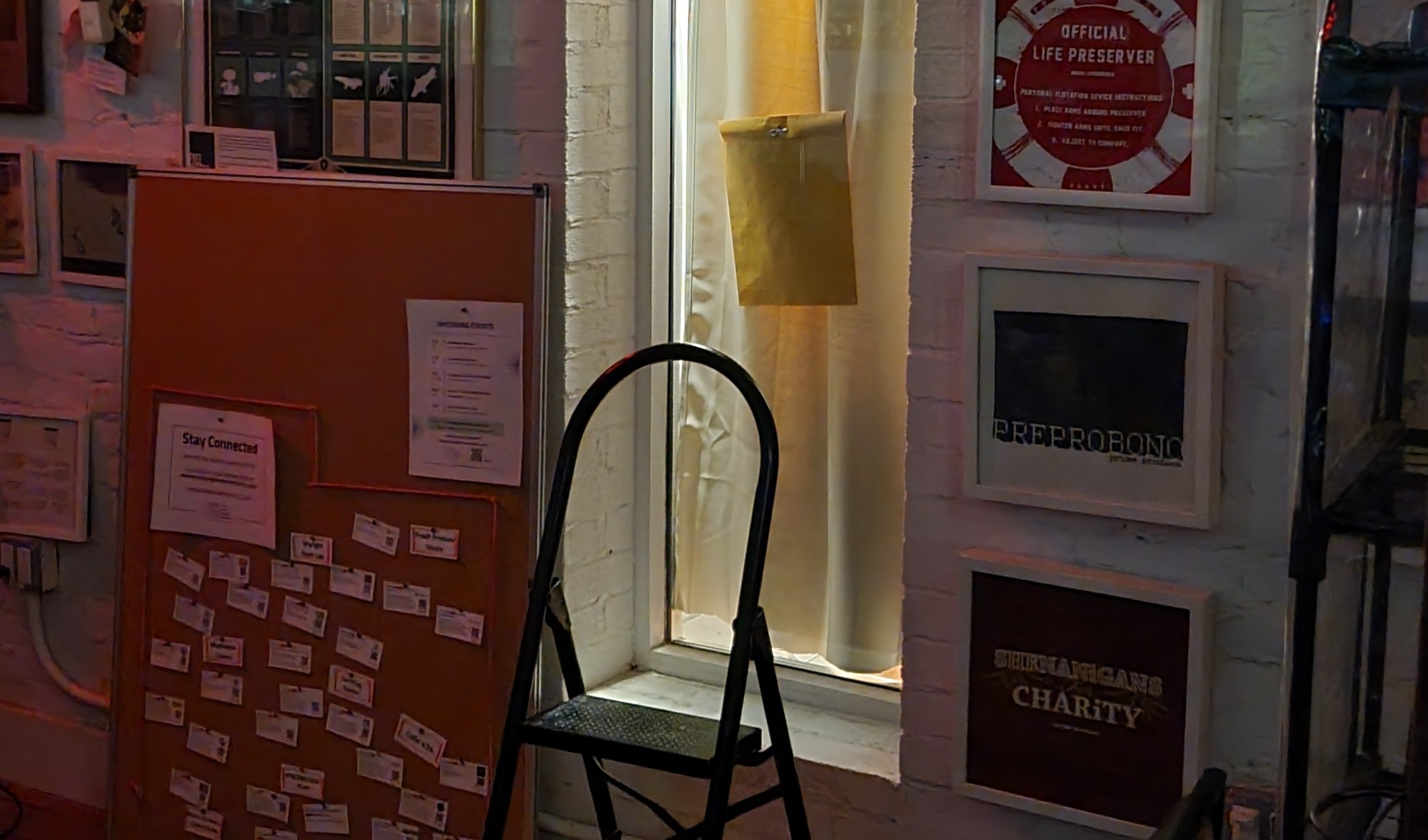 Diary delivery via the release of a magnet through the window
Brick by Brick
The closing beat of the show asked each participant to rebuild their own little corner of this world. Given a box with their name on it, a variety of craft materials, and just a few minutes, every audience member hung up their unique contribution near the titular cottage, the place our characters had imagined for themselves. These contributions were not removed; by the last show, we had a city built piece by piece by every single person who had come on the journey.
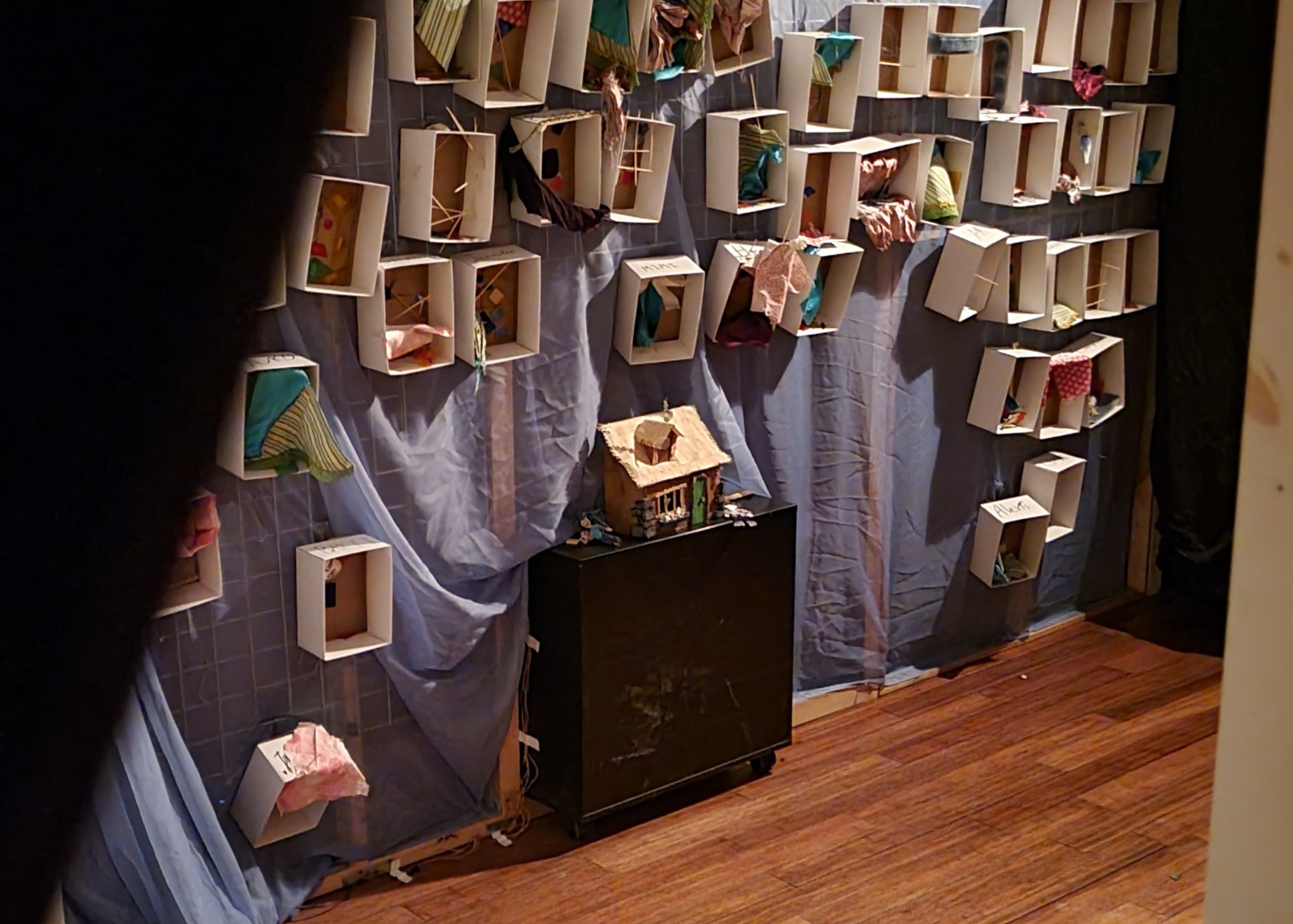 The collective city, mid-show
Audience-as-Participant
Every show was distinct in more ways than that, however. Each group of participants had a unique approach to the collective interactivity: some focused on speed in the puzzles, while some combed through every detail; some collected each map and diary entry and brought them along; some groups nominated a designated reader, some took turns by page, and one group sat in a reading circle and passed the paper through each person.
In many ways, it is this variety that I am most proud of. Our narrative was not choose-your-own-adventure; each audience group received the same story, had the same tasks to accomplish. And yet, because no two experiences were the same, we know that the framework we built supported the purpose of audience-as-participant: how they moved through the story they shaped for themselves, with each other.
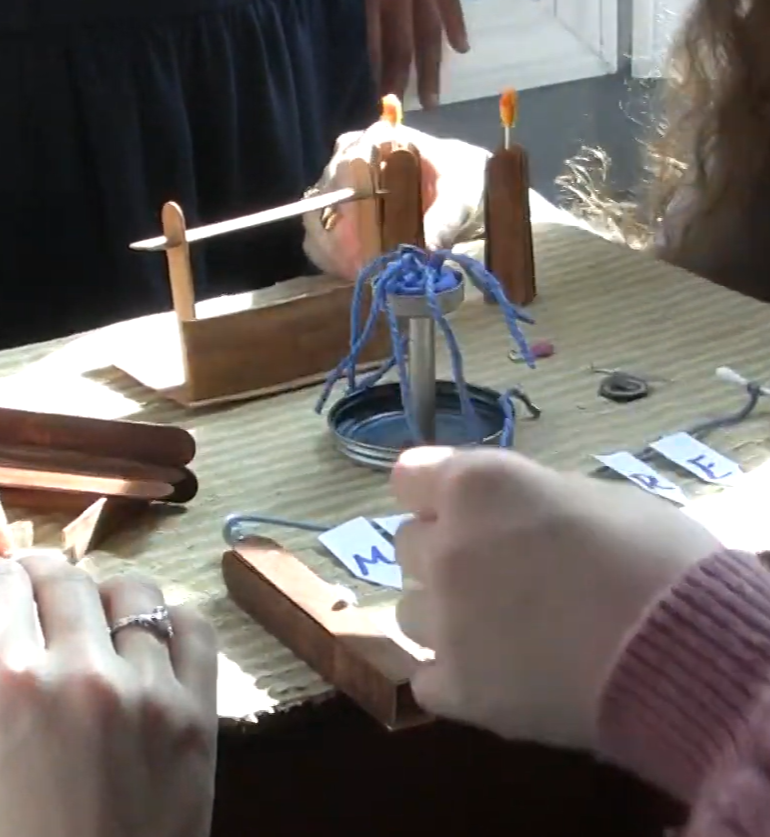 Playtesting in action